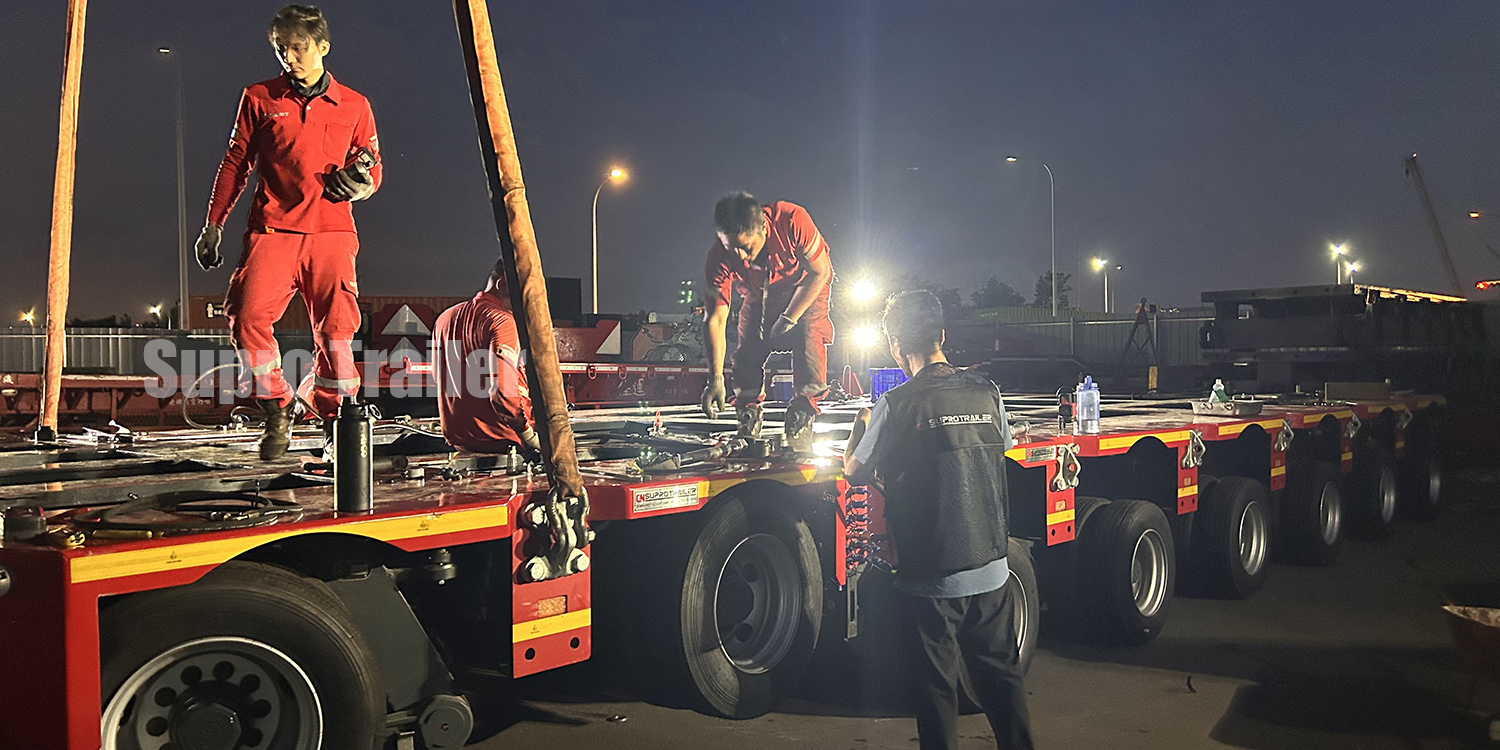
SuproTrailer | Inside the Making of a Split-Version Drop Deck Bed
Author: Supro Trailer Date: 2026.01.06
Producing a split-version drop deck bed is not just about cutting a deck into sections. It is a process that tests structural design, manufacturing accuracy, and real transport experience. Compared with a one-piece drop deck bed, the split version must handle more complex load paths while keeping the overall structure stable and reliable during heavy transport.
One of the biggest challenges is load distribution. When the deck is split, each section must share the load evenly under different road conditions. This requires precise structural calculations and careful matching of beams, joints, and connection points. A small error in design can lead to uneven stress, which affects safety and long-term durability.
Another key difficulty is alignment and assembly accuracy. During production, the flatness and height consistency of each section must be strictly controlled. In real operation, the split deck must connect smoothly on site, without forcing or adjustment. This places high demands on welding quality, machining tolerance, and quality inspection at every step.
Transport flexibility is also a challenge. The split-version drop deck bed is designed to adapt to different cargo lengths and weights, but flexibility should never come at the cost of strength. Material selection, reinforcement design, and real-load testing all play a critical role.
At SuproTrailer, we approach these challenges with practical engineering solutions, stable structures, and manufacturing processes proven by real heavy transport projects. The goal is simple: a split-version drop deck bed that works reliably in the field, not just on paper.